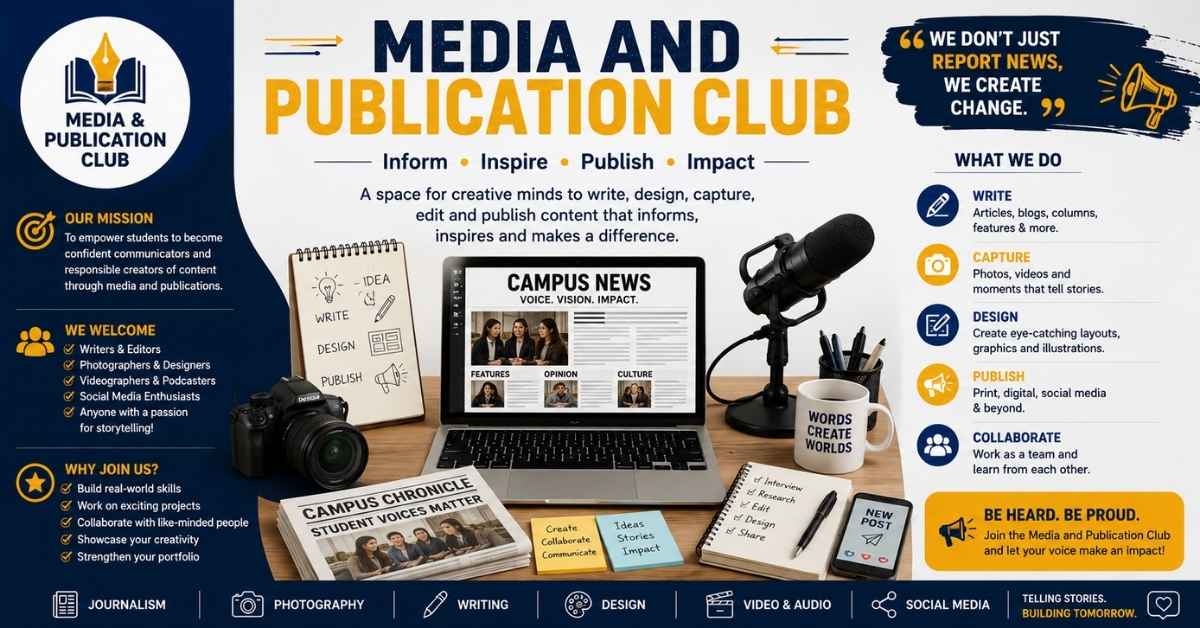
Media and publication club is a student-led organization that develops writing, journalism, editing, photography, videography, graphic design, and communication skills by creating newsletters, magazines, blogs, podcasts, videos, and other school or college publications. It provides students with hands-on experience in content creation, editorial planning, and digital publishing while encouraging teamwork, creativity, and responsible media practices.
Whether you're a student looking to join a media club, a teacher planning to establish a publication club, or a school administrator searching for ideas, a well-organized club can become one of the most engaging extracurricular activities on campus.
Unlike many clubs that focus on a single skill, a media and publication club combines journalism, storytelling, leadership, creativity, and technology. Members learn how to research topics, conduct interviews, write articles, edit content, manage social media, and publish high-quality material that informs and inspires their school community.
What Is a Media and Publication Club?
A media and publication club is an educational organization that allows students to create and manage different forms of school media. Depending on the institution, the club may produce a school newsletter, campus magazine, student newspaper, blog posts, podcasts, photography projects, or digital videos.
Its primary goal is to help students develop practical communication skills while giving them a platform to share ideas, report school events, and showcase student achievements.
Unlike a traditional journalism club, which focuses mainly on reporting and news writing, a media club often includes multimedia production such as:
- Photography
- Videography
- Podcast creation
- Graphic design
- Social media management
- Digital storytelling
- Content marketing
- Creative writing
This combination prepares students for today's digital-first media environment.
Why Every School and College Benefits from a Media and Publication Club
Schools and colleges benefit greatly when students actively participate in media-related activities. Beyond publishing newsletters or magazines, these clubs encourage students to become confident communicators, critical thinkers, and responsible digital citizens.
Builds Strong Communication Skills
Writing articles, conducting interviews, and presenting ideas help students improve both written and verbal communication.
Members gradually become more comfortable expressing their thoughts clearly and professionally.
Encourages Creativity and Critical Thinking
Every publication begins with an idea.
Students learn to:
- Research topics
- Evaluate sources
- Analyze information
- Develop original perspectives
- Solve creative challenges
These experiences strengthen critical thinking skills that extend far beyond journalism.
Develops Leadership and Teamwork
Producing a successful publication requires collaboration.
Editors coordinate writers.
Photographers work with designers.
Social media managers promote published content.
Each member contributes to a common goal while learning responsibility, accountability, and leadership.
Prepares Students for Future Careers
Students interested in careers involving:
- Journalism
- Mass communication
- Public relations
- Marketing
- Graphic design
- Photography
- Video production
- Content creation
gain valuable real-world experience through club activities.
Even students pursuing other careers benefit from improved communication and organizational skills.
Creates a Strong School Identity
Regularly publishing newsletters, magazines, and digital content highlights student achievements, academic events, competitions, and community service projects.
This strengthens school culture while increasing student engagement.
Objectives of a Media and Publication Club
Every successful publication club should have clear goals that guide its activities throughout the academic year.
Promote Student Journalism
Students learn the principles of ethical journalism, responsible reporting, and fact-based storytelling.
They discover how to report school events accurately while respecting privacy and fairness.
Improve Writing and Editing Skills
Writing improves through practice.
Club members learn how to:
- Write engaging headlines
- Structure articles
- Edit for clarity
- Proofread content
- Maintain consistent editorial standards
These skills remain valuable throughout higher education and professional careers.
Encourage Responsible Media Practices
Students learn the importance of:
- Fact-checking
- Source verification
- Copyright awareness
- Ethical journalism
- Responsible social media use
These principles build credibility and digital responsibility.
Develop Digital Content Creation Skills
Modern student publications extend beyond printed magazines.
Members gain experience creating:
- Blog posts
- Digital newsletters
- Podcasts
- Short videos
- Photo stories
- Social media campaigns
These practical experiences reflect today's media industry.
Build Confidence Through Public Communication
Presenting ideas, interviewing guests, hosting podcasts, and speaking during meetings gradually increase students' confidence.
Many members who begin quietly become effective communicators over time.
How to Start a Media and Publication Club
Starting a successful school media club requires thoughtful planning rather than simply gathering interested students.
Define the Club's Mission
Ask questions such as:
- What type of publications will the club produce?
- Who is the target audience?
- What values will guide the editorial team?
- How often will content be published?
A clear mission helps every member understand the club's purpose.
Obtain School or College Approval
Work with administrators to gain official recognition.
Prepare a proposal explaining:
- Club objectives
- Educational benefits
- Planned activities
- Faculty supervision
- Resource requirements
Official approval often makes it easier to secure meeting spaces, equipment, and funding.
Recruit Passionate Members
A successful student publication depends on diverse talents.
Look for students interested in:
- Writing
- Photography
- Graphic design
- Video editing
- Social media
- Public speaking
- Event coverage
- Research
Remember, enthusiasm and willingness to learn matter more than previous experience.
Elect Student Leaders
Assign leadership positions early to ensure responsibilities are clearly distributed.
Typical positions include:
- President
- Vice President
- Editor-in-Chief
- Managing Editor
- Content Coordinator
Strong leadership helps projects stay organized and meet publication deadlines.
Assign a Faculty Advisor
A faculty advisor provides guidance, ensures responsible journalism, and supports students without limiting their creativity.
The advisor can also:
- Review sensitive content
- Offer editorial feedback
- Coordinate with school administration
- Assist with event planning
Create Club Rules and Editorial Guidelines
Establish clear expectations before publishing the first article.
Include guidelines for:
- Meeting attendance
- Submission deadlines
- Fact-checking procedures
- Copyright compliance
- Editorial approval
- Respectful communication
- Ethical reporting
Having documented standards helps maintain consistency and professionalism from the beginning.
Quick Startup Checklist
Before launching your media and publication club, confirm that you have completed these essentials:
- ✅ Defined the club's mission and vision
- ✅ Received school approval
- ✅ Appointed a faculty advisor
- ✅ Recruited interested members
- ✅ Assigned leadership roles
- ✅ Created editorial guidelines
- ✅ Planned the first month's activities
- ✅ Selected publishing platforms
Completing these steps gives your club a strong foundation and prepares members for successful collaboration in future publishing projects.
Organizational Structure and Member Roles
A successful media and publication club depends on teamwork. Every member should understand their responsibilities while working toward a shared goal of producing high-quality content.
President
The President oversees the club's vision and ensures every project stays on track.
Key responsibilities:
- Lead club meetings
- Coordinate major events
- Represent the club before school administration
- Motivate team members
- Monitor overall progress
Vice President
The Vice President supports the president and manages day-to-day operations.
Responsibilities include:
- Supervising committees
- Organizing schedules
- Managing deadlines
- Coordinating activities when the president is unavailable
Editor-in-Chief
The Editor-in-Chief ensures every publication meets the club's editorial standards.
Their role includes:
- Approving article topics
- Reviewing final drafts
- Maintaining content quality
- Planning each issue of the school newsletter or campus magazine
Managing Editor
The Managing Editor keeps the editorial workflow organized.
Responsibilities include:
- Assigning stories
- Tracking deadlines
- Coordinating writers
- Monitoring publication schedules
Writers and Reporters
Writers create the content that represents the club.
They may produce:
- News articles
- Feature stories
- Interviews
- Opinion pieces
- Event reports
- Creative writing
Strong research and fact-checking are essential before publishing.
Photographers
Images help bring stories to life.
Photographers cover:
- School events
- Competitions
- Community activities
- Club meetings
- Student achievements
High-quality visuals increase reader engagement.
Graphic Designers
Graphic designers make publications attractive and easy to read.
They work on:
- Magazine layouts
- Posters
- Infographics
- Social media graphics
- Newsletter templates
Good design improves readability and strengthens the club's visual identity.
Social Media Managers
Today's media club extends beyond printed publications.
Social media managers:
- Share published content
- Engage students online
- Promote upcoming events
- Increase audience reach
- Build the club's digital presence
Video Editors
Video editors produce multimedia content such as:
- Event highlights
- Student interviews
- Educational videos
- Club documentaries
- Promotional clips
Adding video content helps modernize the club and attracts wider participation.
Proofreaders
Proofreaders review every article before publication.
They check:
- Grammar
- Spelling
- Punctuation
- Consistency
- Formatting
- Accuracy
A strong proofreading process improves professionalism and builds reader trust.
Step-by-Step Editorial Workflow
A structured editorial workflow helps maintain consistency and reduces publishing errors.
Step 1: Generate Story Ideas
Every publication starts with brainstorming.
Potential ideas include:
- School events
- Student achievements
- Teacher interviews
- Sports updates
- Academic competitions
- Community service projects
- Opinion articles
- Creative writing
Encourage every member to contribute ideas.
Step 2: Research and Conduct Interviews
Gather reliable information before writing.
Students should:
- Verify facts
- Interview relevant people
- Take accurate notes
- Collect supporting photographs
- Confirm dates and names
Good journalism begins with careful research.
Step 3: Write the First Draft
Focus on:
- Clear introductions
- Logical structure
- Short paragraphs
- Engaging headlines
- Accurate information
Don't worry about perfection during the first draft—editing comes later.
Step 4: Fact-Check Every Article
Never publish unverified information.
Confirm:
- Statistics
- Quotes
- Names
- Dates
- Sources
This step reinforces ethical journalism and protects the club's credibility.
Step 5: Edit and Proofread
Editors review:
- Clarity
- Tone
- Grammar
- Readability
- Consistency
Constructive feedback helps writers improve with every publication.
Step 6: Design and Layout
Once the content is finalized, designers prepare the publication.
This includes:
- Images
- Headlines
- Captions
- Fonts
- White space
- Visual hierarchy
An attractive layout encourages more students to read the publication.
Step 7: Publish the Content
Depending on the club's goals, publish through:
- School newsletter
- Campus magazine
- Student newspaper
- School website
- Club blog
- Digital newsletter
- Social media channels
Using multiple platforms helps reach a wider audience.
Step 8: Promote and Review
Publishing isn't the end of the process.
Promote each issue through:
- School announcements
- Email newsletters
- Notice boards
- Social media
- Classroom presentations
After publication, gather feedback to improve future editions.
Activities Every Media and Publication Club Should Organize
Keeping members engaged requires a variety of creative activities throughout the year.
School Newsletter
Publish a monthly or quarterly newsletter featuring:
- School news
- Student achievements
- Upcoming events
- Teacher messages
- Club highlights
Campus Magazine
A yearly or semester-based campus magazine allows students to publish:
- Feature articles
- Creative writing
- Artwork
- Interviews
- Photography
Photography Competitions
Organize themed contests such as:
- Nature photography
- Campus life
- Cultural events
- Sports moments
Display winning entries around the school or online.
Student Podcast
Launch a podcast covering:
- Student interviews
- Academic tips
- Career advice
- School events
- Guest speakers
Podcasting improves communication and interviewing skills.
Video Journalism Projects
Students can produce:
- Event coverage
- Documentaries
- Behind-the-scenes videos
- Educational explainers
- Campus tours
This develops videography and storytelling skills.
Blogging Challenges
Encourage members to publish blog posts on:
- Technology
- Education
- Student life
- Book reviews
- Environmental awareness
Blogging strengthens writing consistency and creativity.
Creative Writing Workshops
Host sessions on:
- Storytelling
- Feature writing
- Poetry
- Scriptwriting
- Editorial writing
Invite experienced writers or teachers whenever possible.
Public Speaking Sessions
Students can present:
- News summaries
- Book reviews
- Debate topics
- Interview findings
These activities help build confidence and leadership.
Media Literacy Campaigns
Teach students how to:
- Identify misinformation
- Verify online sources
- Understand responsible social media use
- Recognize bias in news reporting
Media literacy is an increasingly valuable life skill.
Interview Local Professionals
Invite:
- Journalists
- Authors
- Editors
- Photographers
- Broadcasters
- Digital content creators
Hearing real-world experiences inspires students and connects classroom learning with professional careers.
Essential Tools and Resources
A well-equipped publication club doesn't need an expensive budget. Start with practical tools that improve collaboration and content quality.
Writing and Editing Tools
Use applications that support:
- Article drafting
- Grammar checking
- Collaborative editing
- Version control
These tools make teamwork much easier.
Graphic Design Software
Design software helps create:
- Posters
- Magazine covers
- Infographics
- Social media graphics
- Event banners
Good design enhances the impact of every publication.
Photography Equipment
Basic equipment may include:
- Cameras
- Tripods
- Microphones
- Lighting
- Memory cards
Even smartphones can produce excellent results when used effectively.
Video Editing Applications
Editing software allows students to:
- Trim videos
- Add captions
- Include transitions
- Improve audio
- Export high-quality projects
These skills are increasingly valuable in digital media careers.
Collaboration and Project Management
Organize work using shared calendars, task lists, and collaborative workspaces so everyone knows deadlines and responsibilities.
Publishing Platforms
Choose platforms based on your audience.
Options include:
- School websites
- Blogs
- Email newsletters
- Digital magazines
- Social media pages
Publishing across multiple channels increases visibility and engagement.
How to Publish High-Quality Student Content
Quality matters more than quantity.
Before publishing any article, ask:
- Is the information accurate?
- Does it provide value?
- Has it been edited?
- Are images properly credited?
- Does it follow the club's editorial guidelines?
High editorial standards build trust and encourage readers to return for future publications.
Digital Media Strategies for Modern Clubs
Today's media and publication club should combine traditional journalism with modern digital communication.
Consider expanding into:
- Digital newsletters
- Student blogs
- Podcast series
- Short educational videos
- Event livestreams
- Social media storytelling
- Multimedia reporting
Using multiple content formats helps students develop versatile media skills while reaching a wider audience.
Common Challenges and Practical Solutions
Every media and publication club faces challenges, especially during its first year. The key is to identify problems early and implement practical solutions that keep members motivated and productive.
| Challenge | Practical Solution |
| Low student participation | Organize recruitment drives, showcase published work, and encourage peer referrals. |
| Missed deadlines | Create an editorial calendar with realistic timelines and assign clear responsibilities. |
| Limited budget | Seek school support, local sponsorships, fundraising events, or digital publishing to reduce printing costs. |
| Inconsistent content quality | Introduce a structured editing and proofreading process before publishing. |
| Lack of story ideas | Hold brainstorming sessions and encourage students to submit topic suggestions. |
| Poor communication | Schedule weekly meetings and use collaborative tools to track tasks and deadlines. |
Most challenges can be solved through better planning, teamwork, and consistent communication.
Annual Activity Calendar
Planning activities throughout the academic year keeps the club active and organized.
| Month | Suggested Activity |
| January | Club orientation and member recruitment |
| February | Journalism and creative writing workshop |
| March | Photography competition |
| April | Publish the first school newsletter |
| May | Student podcast or interview series |
| June | Video journalism project |
| July | Community storytelling campaign |
| August | Digital newsletter edition |
| September | School magazine preparation |
| October | Media literacy awareness event |
| November | Journalism competition or guest speaker session |
| December | Annual awards, feedback meeting, and future planning |
This schedule can be adapted based on your school's academic calendar and available resources.
Skills Students Develop by Joining the Club
A media club is much more than a place to publish articles. It helps students build lifelong personal and professional skills.
Communication Skills
Writing articles, conducting interviews, and presenting ideas improve both written and verbal communication.
Leadership
Students learn how to lead teams, organize projects, manage deadlines, and make decisions confidently.
Journalism
Members gain hands-on experience in:
- News writing
- Feature writing
- Interviewing
- Fact-checking
- Ethical reporting
Editing and Proofreading
Students improve their ability to review content for:
- Grammar
- Structure
- Accuracy
- Clarity
- Readability
Graphic Design
Creating newsletters, posters, and social media graphics strengthens visual communication skills.
Photography and Videography
Students learn to tell stories using images and videos while understanding composition, lighting, and editing basics.
Teamwork
Producing a successful publication requires cooperation among writers, editors, designers, photographers, and social media managers.
Project Management
Members learn how to:
- Plan projects
- Meet deadlines
- Assign responsibilities
- Track progress
- Deliver quality work consistently
Critical Thinking
Researching stories and evaluating sources encourages students to think analytically and make informed decisions.
These transferable skills are valuable for higher education, internships, and future careers in journalism, marketing, education, business, and many other fields.
LEARN MORE: Planning de publication social media
Measuring the Success of Your Media and Publication Club
A successful club regularly evaluates its progress instead of relying on assumptions.
Track measurable indicators such as:
- Number of articles published
- Newsletter readership
- Campus magazine downloads
- Student participation
- Event attendance
- Social media engagement
- Website or blog visitors
- Member retention
- Community feedback
- Skills developed by members
Club Success Scorecard
Use this simple evaluation table every semester.
| Category | Score (Out of 10) |
| Leadership | ☐ |
| Teamwork | ☐ |
| Content Quality | ☐ |
| Publishing Consistency | ☐ |
| Student Engagement | ☐ |
| Creativity | ☐ |
| Digital Presence | ☐ |
| Community Impact | ☐ |
| Professional Development | ☐ |
| Overall Performance | ☐ |
Reviewing these areas helps identify strengths and opportunities for improvement.
Frequently Asked Questions
What Is a Media and Publication Club?
A media and publication club is a student organization that creates newsletters, magazines, blogs, podcasts, videos, and other publications while helping members develop communication, journalism, editing, leadership, and digital media skills.
Who Can Join a Media and Publication Club?
Most schools and colleges welcome students who are interested in:
- Writing
- Journalism
- Photography
- Graphic design
- Videography
- Public speaking
- Social media management
- Content creation
Previous experience is helpful but not required. Enthusiasm and a willingness to learn are often more important.
What Activities Does a Media and Publication Club Organize?
Typical activities include:
- Publishing a school newsletter
- Producing a campus magazine
- Photography contests
- Podcast recording
- Blogging challenges
- Journalism workshops
- Public speaking sessions
- Video journalism projects
- Media literacy campaigns
- Interviewing guest speakers
What Skills Can Students Learn?
Students develop a wide range of valuable skills, including:
- Writing and editing
- Journalism
- Leadership
- Teamwork
- Communication
- Photography
- Graphic design
- Video production
- Project management
- Critical thinking
How Do Schools Start a Media and Publication Club?
Schools can begin by:
- Defining the club's mission.
- Obtaining administrative approval.
- Appointing a faculty advisor.
- Recruiting student members.
- Assigning leadership roles.
- Creating editorial guidelines.
- Planning the first publication.
What Equipment Does a Media Club Need?
Basic equipment may include:
- Computers
- Cameras
- Smartphones
- Microphones
- Tripods
- Graphic design software
- Video editing tools
- Collaborative writing platforms
Many clubs start successfully with limited resources and expand as they grow.
How Often Should the Club Publish Content?
The publishing schedule depends on available resources.
Many clubs publish:
- Weekly blog posts
- Monthly newsletters
- Quarterly magazines
- Annual yearbooks or special editions
Consistency is more important than publishing frequently.
Can a Media and Publication Club Operate Online?
Absolutely. Modern clubs often combine printed publications with:
- School blogs
- Digital newsletters
- Social media pages
- Podcasts
- Video channels
- Online magazines
A digital presence helps reach a wider audience and provides members with valuable multimedia experience.
Final Thoughts
A well-managed media and publication club is more than an extracurricular activity—it is a platform where students learn to communicate effectively, think critically, collaborate with others, and express their creativity through meaningful storytelling.
By combining student journalism, digital publishing, photography, videography, graphic design, and ethical media practices, the club prepares members for both academic success and future careers. More importantly, it gives students the confidence to share ideas, report responsibly, and make a positive contribution to their school community.
Whether you're planning to start a media and publication club, improve an existing school media club, or develop a thriving student publication, focus on creating a supportive environment where every member has the opportunity to learn, contribute, and grow.
Before launching your next newsletter, magazine, podcast, or digital campaign, ask your team one simple question:
"Does this content educate, inspire, or genuinely help our audience?"
If the answer is yes, you're not just producing another publication—you're building a media and publication club that informs, empowers, and leaves a lasting impact on your school or college community.