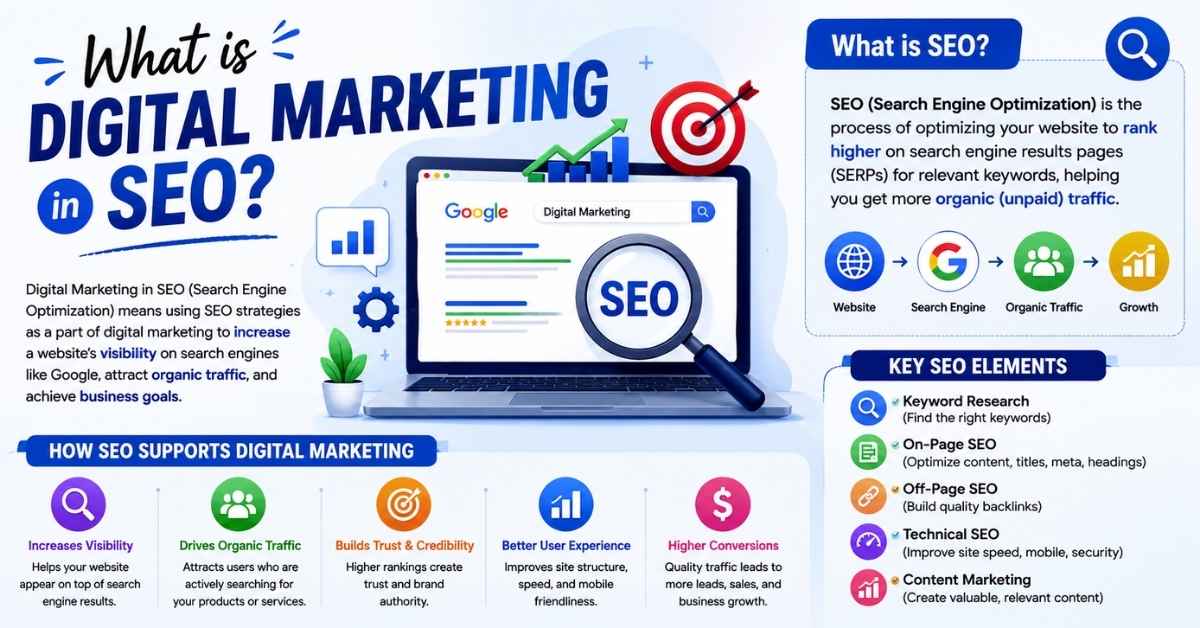
Digital marketing in SEO refers to using Search Engine Optimization (SEO) as a core part of a digital marketing strategy to increase organic traffic, improve search engine rankings, generate qualified leads, and grow a business online. SEO helps your website become more visible on search engines like Google by optimizing content, technical performance, user experience, and authority. In simple terms, SEO is one of the most important components of digital marketing, helping businesses attract customers without relying entirely on paid advertising.
Whether you're a blogger, small business owner, eCommerce entrepreneur, or digital marketer, understanding how SEO fits into digital marketing is essential. Modern SEO is no longer just about inserting keywords into web pages. It now involves search intent, semantic SEO, entity optimization, EEAT (Experience, Expertise, Authoritativeness, and Trustworthiness), content marketing, and delivering a better user experience.
In this guide, you'll learn what is digital marketing in SEO, how it works, why it matters, and how to use it as a long-term strategy for sustainable business growth.
Quick Answer: What Is Digital Marketing in SEO?
If you've ever wondered what is digital marketing in SEO, the answer is straightforward.
SEO is a branch of digital marketing that focuses on improving a website's visibility in organic search results. Unlike paid advertising, SEO helps businesses earn traffic naturally by creating helpful content, optimizing web pages, improving technical performance, and building online authority.
A successful SEO strategy combines:
- Keyword research
- Search intent optimization
- On-page SEO
- Technical SEO
- Content marketing
- Link building
- Internal linking
- Local SEO
- Semantic SEO
- User experience optimization
When these elements work together, they help search engines understand your website and connect it with users searching for relevant information.
Understanding the Relationship Between SEO and Digital Marketing
Many beginners use the terms SEO and digital marketing interchangeably. While they are closely related, they are not the same.
Digital marketing is the broader strategy that includes several online marketing channels, while SEO is one of those channels.
What Is Digital Marketing in SEO?
Digital marketing involves promoting products, services, or brands through online platforms such as search engines, websites, email, social media, and paid advertising.
SEO contributes to this strategy by increasing a website's visibility in search engine results without paying for every click.
Instead of interrupting potential customers with ads, SEO helps your business appear when people are actively searching for solutions.
For example:
A user searches for "best running shoes for beginners."
A website optimized with high-quality content, relevant keywords, and strong technical SEO has a much better chance of appearing in Google's search results.
This is how SEO supports digital marketing by attracting highly targeted visitors.
Is Digital Marketing in SEO or Is SEO Part of Digital Marketing?
This question often causes confusion.
The correct answer is:
SEO is a part of digital marketing.
Think of digital marketing as an umbrella.
Under that umbrella are several important strategies, including:
- Search Engine Optimization (SEO)
- Content Marketing
- Social Media Marketing
- Pay-Per-Click (PPC) Advertising
- Email Marketing
- Affiliate Marketing
- Video Marketing
Each channel plays a unique role, but SEO often provides the strongest long-term return because it generates sustainable organic traffic.
Why Many Beginners Confuse These Two Terms
The confusion usually comes from the fact that SEO is often the first digital marketing strategy businesses implement.
When people see increased website traffic from Google, they naturally associate SEO with digital marketing as a whole.
Understanding the distinction helps you create a balanced marketing strategy where SEO works alongside other channels instead of replacing them.
How Search Engines Connect Users With Businesses
Every day, billions of searches are performed on Google.
Search engines aim to deliver the most relevant and helpful results based on:
- Search intent
- Content quality
- Website authority
- Page experience
- Technical performance
- Semantic relevance
When your website aligns with these factors, it becomes easier for potential customers to discover your business organically.
Why SEO Is the Foundation of Digital Marketing
Many digital marketing channels can generate traffic, but SEO offers unique long-term advantages that make it the foundation of a successful online strategy.
Building Long-Term Organic Visibility
Paid advertising can deliver immediate traffic, but it stops the moment your budget runs out.
SEO is different.
A well-optimized article can continue attracting visitors for months or even years after publication.
This makes SEO one of the most cost-effective digital marketing investments.
Driving Qualified Website Traffic
SEO targets users who are already searching for information, products, or services.
This means your visitors often have stronger purchase intent compared to audiences reached through interruptive advertising.
For example:
Someone searching for "best CRM software for small business" is much closer to making a purchase than someone casually scrolling through social media.
Increasing Brand Authority and Trust
People naturally trust websites that appear on the first page of Google.
Consistently ranking for relevant topics helps establish your business as a reliable source of information.
Publishing helpful content also strengthens EEAT, encouraging users to spend more time on your website and return for future searches.
Supporting Every Stage of the Customer Journey
SEO contributes throughout the entire marketing funnel.
| Customer Journey Stage | How SEO Helps |
| Awareness | Educational blog posts answer common questions. |
| Consideration | Product comparisons and buying guides help users evaluate options. |
| Decision | Optimized service and product pages encourage conversions. |
| Retention | Helpful resources and FAQs build loyalty and repeat visits. |
This makes SEO much more than a traffic-generation tool—it supports customer relationships from the first search to long-term engagement.
How SEO Works Within a Complete Digital Marketing Strategy
SEO delivers the best results when combined with other digital marketing channels rather than operating independently.
SEO and Content Marketing
Content marketing and SEO complement each other perfectly.
SEO helps people discover your content, while high-quality content gives search engines a reason to rank your pages.
Examples include:
- Blog posts
- Buying guides
- Tutorials
- Case studies
- Industry reports
- Frequently asked questions
Creating content that genuinely solves user problems improves both rankings and engagement.
SEO and Social Media Marketing
Although social media signals are not direct ranking factors, social platforms help expand the reach of your content.
Sharing blog posts on platforms such as LinkedIn, Facebook, and X can:
- Increase brand awareness
- Drive referral traffic
- Encourage backlinks
- Build audience engagement
These indirect benefits support long-term SEO performance.
SEO and Pay-Per-Click (PPC)
Many businesses assume they must choose between SEO and PPC.
In reality, the strongest digital marketing strategies use both.
PPC provides immediate visibility, while SEO builds sustainable traffic over time.
Together, they create a balanced marketing approach that supports both short-term and long-term goals.
SEO and Email Marketing
Email marketing helps businesses reconnect with existing audiences.
By sharing new blog posts, industry updates, and helpful resources through email campaigns, you can:
- Increase returning visitors
- Improve content engagement
- Strengthen brand loyalty
- Encourage repeat conversions
SEO and Conversion Rate Optimization (CRO)
Generating traffic is only part of the process.
Conversion Rate Optimization (CRO) focuses on turning visitors into leads or customers.
SEO and CRO work together by:
- Attracting the right audience.
- Improving page experience.
- Increasing trust through helpful content.
- Encouraging users to take action.
A website that ranks well but fails to convert visitors misses valuable business opportunities.
How These Channels Work Together
Think of digital marketing as a connected ecosystem rather than a collection of isolated tactics.
SEO attracts users through organic search.
Content educates them.
Social media expands visibility.
Email nurtures relationships.
CRO converts visitors into customers.
When these channels support one another, businesses create a sustainable marketing system capable of generating long-term growth.
The Core Elements of SEO Every Digital Marketer Should Know
Before implementing SEO, it's important to understand the key components that influence search performance.
Keyword Research
Keyword research identifies the phrases your audience searches for.
Focus on:
- Primary keywords
- Long-tail keywords
- Search intent
- Keyword difficulty
- Search volume
Modern keyword research also considers semantic keywords and related entities rather than exact-match phrases alone.
Search Intent Optimization
Google's primary goal is to satisfy user intent.
Every piece of content should answer the user's question clearly and comprehensively.
Whether someone wants information, comparisons, or products, your page should provide the most helpful solution available.
On-Page SEO
On-page optimization includes:
- Optimized title tags
- Meta descriptions
- Heading structure
- Internal links
- Image optimization
- Clear content organization
These improvements help both users and search engines understand your content more effectively.
Technical SEO
Technical SEO ensures your website is easy for search engines to crawl and index.
Key areas include:
- Site speed
- Mobile responsiveness
- Core Web Vitals
- Secure HTTPS connections
- XML sitemaps
- Crawlability
- Indexing
A technically healthy website provides a stronger foundation for long-term SEO success.
Local Digital Marketing in SEO: Why Local Businesses Need SEO
For businesses that serve a specific city or region, local digital marketing in SEO is one of the most effective ways to attract nearby customers. Instead of competing nationally, local SEO helps your business appear when people search for products or services in their area.
For example, someone searching for "best coffee shop near me" or "emergency plumber in Chicago" is usually ready to take action. Ranking for these searches can generate highly qualified leads.
How Local SEO Attracts Nearby Customers
Local SEO improves your visibility in:
- Google Search
- Google Maps
- Local search results
- Mobile "near me" searches
This helps potential customers discover your business exactly when they need it.
Optimizing Your Google Business Profile
One of the first steps in local SEO is creating and optimizing your Google Business Profile.
Complete every important detail, including:
- Business name
- Address
- Phone number
- Website
- Business hours
- Categories
- High-quality photos
An optimized profile improves your chances of appearing in local search results and Google Maps.
Local Keyword Research
Local keywords combine your service with a location.
Examples include:
- SEO agency in New York
- Digital marketing company in Dallas
- Best dentist in London
- Local bakery in Toronto
These keywords usually have strong commercial intent because users are actively looking for nearby businesses.
Managing Online Reviews
Customer reviews influence both trust and local rankings.
Encourage satisfied customers to leave honest reviews and respond professionally to all feedback.
Positive reviews improve your reputation while helping potential customers choose your business.
Building Local Citations
Local citations are mentions of your business information across trusted directories.
Ensure your:
- Business name
- Address
- Phone number (NAP)
remain consistent everywhere online.
Consistency helps search engines verify your business information.
Common Local SEO Mistakes
Avoid these common errors:
- Incomplete Google Business Profile
- Inconsistent business information
- Ignoring customer reviews
- Targeting overly broad keywords
- Publishing duplicate location pages
Fixing these issues can significantly improve local visibility.
Step-by-Step SEO Framework for Business Growth
Whether you're a beginner or an experienced marketer, following a structured SEO process produces better long-term results.
Step 1: Define Your Business Goals
Before researching keywords, determine what success looks like.
Examples include:
- Increasing organic traffic
- Generating more leads
- Growing online sales
- Improving local visibility
- Building brand awareness
Clear goals help shape your SEO strategy.
Step 2: Understand Your Target Audience
Successful SEO begins with understanding your customers.
Ask questions such as:
- What problems are they trying to solve?
- What words do they use when searching?
- Which devices do they use?
- What stage of the buying journey are they in?
This information helps you create content that truly matches user intent.
Step 3: Perform Keyword Research
Use keyword research tools to identify:
- Primary keywords
- Secondary keywords
- Long-tail keywords
- Question-based keywords
- Commercial keywords
Instead of chasing the highest search volume, focus on keywords that closely match your audience's needs.
Step 4: Build a Content Strategy
Create content around related topics rather than isolated keywords.
A strong content strategy may include:
- Pillar pages
- Topic clusters
- How-to guides
- Comparison articles
- Case studies
- FAQs
This approach strengthens topical authority and helps search engines understand your expertise.
Step 5: Optimize Your Website
Improve both user experience and technical performance by focusing on:
- Fast loading speeds
- Mobile responsiveness
- Clear navigation
- Internal linking
- Optimized images
- Secure HTTPS connections
Technical improvements support higher rankings and better engagement.
Step 6: Publish Helpful Content
Every article should answer a real question or solve a specific problem.
Avoid creating content solely for search engines.
Instead, prioritize:
- Original insights
- Clear explanations
- Practical examples
- Up-to-date information
Helpful content naturally attracts links, shares, and returning visitors.
Step 7: Build High-Quality Backlinks
Backlinks remain an important ranking signal.
Focus on earning links through:
- Guest posting
- Digital PR
- Original research
- Resource pages
- Industry partnerships
Quality matters far more than quantity.
Step 8: Track Results and Improve Continuously
SEO is an ongoing process.
Review your performance regularly using tools such as:
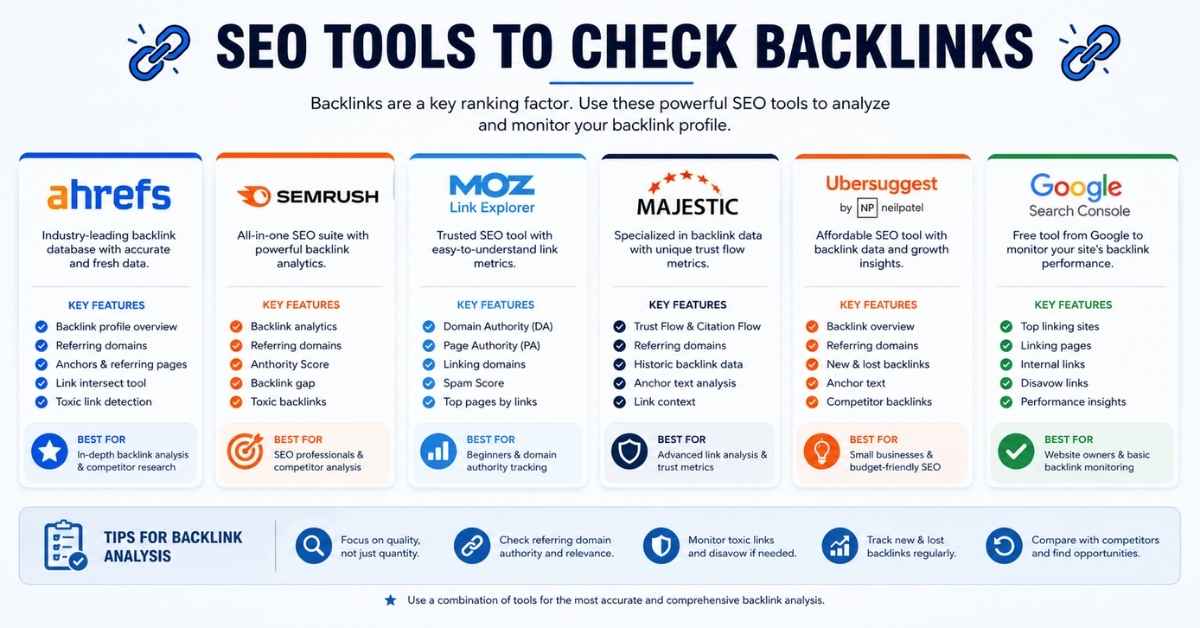
- Google Search Console
- Google Analytics
- Ahrefs
- Semrush
Analyze your data and improve pages that aren't meeting expectations.
Real Examples of Digital Marketing in SEO
Understanding theory is helpful, but practical examples make implementation easier.
Blog Website Example
Imagine you run an SEO blog.
Your strategy might include:
- Keyword research guides
- Technical SEO tutorials
- Link-building articles
- AI SEO content
- Local SEO tips
These articles work together to build topical authority, increase organic traffic, and establish expertise.
E-commerce Store Example
An online clothing store can use SEO by creating:
- Category pages
- Buying guides
- Product comparisons
- Style advice
- Seasonal trend articles
This content attracts visitors at different stages of the buying journey.
Local Business Example
A plumbing company can target searches such as:
- Emergency plumber
- Drain cleaning
- Water heater repair
- Leak detection
Combining location-based keywords with helpful service pages improves local visibility and lead generation.
SaaS Company Example
A project management software company might publish:
- Productivity tips
- Workflow automation guides
- Team collaboration advice
- Software comparisons
Educational content attracts potential customers before they are ready to purchase.
Service-Based Business Example
A law firm, accounting practice, or marketing agency can build authority by publishing articles that answer common client questions.
Helpful educational content positions the business as a trusted expert while attracting highly qualified leads.
SEO vs Other Digital Marketing Channels
Every marketing channel has strengths and weaknesses.
| Marketing Channel | Best For | Cost | Speed | Long-Term Value |
| SEO | Organic traffic | Medium | Slow | Excellent |
| PPC Advertising | Immediate traffic | High | Fast | Ends when ads stop |
| Social Media Marketing | Brand awareness | Medium | Medium | Moderate |
| Email Marketing | Customer retention | Low | Medium | High |
| Content Marketing | Education and trust | Medium | Medium | Excellent |
When SEO Is the Better Choice
SEO is ideal when your goal is to:
- Build long-term visibility.
- Reduce reliance on paid ads.
- Generate consistent traffic.
- Increase brand authority.
Although results take time, SEO often delivers the highest long-term return on investment.
When Paid Advertising Makes More Sense
PPC is useful when you need:
- Immediate visibility
- Product launches
- Seasonal promotions
- Time-sensitive campaigns
Paid ads and SEO often work best together rather than competing with each other.
Why Combining Both Produces Better Results
Many successful businesses use SEO for long-term growth while using paid advertising for short-term opportunities.
This balanced approach increases visibility across multiple customer touchpoints.
Common SEO Mistakes That Hurt Digital Marketing Campaigns
Even strong marketing strategies can fail if common SEO mistakes are ignored.
Ignoring Search Intent
Creating content that doesn't answer the user's question leads to poor engagement and lower rankings.
Always understand why someone is searching before writing.
Publishing Thin Content
Short, low-value articles rarely perform well.
Aim to provide complete, helpful answers supported by examples and practical advice.
Poor Internal Linking
Without internal links, users and search engines struggle to navigate your website.
Link related content naturally to strengthen topical relationships.
Keyword Stuffing
Repeating the same keyword excessively creates a poor reading experience.
Use primary keywords naturally while incorporating semantic keywords, LSI terms, and related entities.
Weak Technical SEO
Technical issues such as slow loading speeds, broken links, poor mobile usability, and indexing errors can limit your visibility regardless of content quality.
Regular technical audits help identify and resolve these problems.
Neglecting Mobile Optimization
Most searches now occur on mobile devices.
A website that performs poorly on smartphones risks losing both rankings and potential customers.
Forgetting Content Updates
SEO isn't a one-time task.
Refresh important pages by:
- Updating statistics
- Improving examples
- Adding new insights
- Expanding FAQs
- Refreshing internal links
Regular updates help maintain rankings and demonstrate ongoing expertise.
LEARN MORE: Topical Authority SEO Guide
Measuring SEO Success in Digital Marketing
Launching an SEO campaign is only the beginning. To understand whether your efforts are delivering results, you need to monitor the right performance indicators instead of relying on rankings alone.
Organic Traffic
One of the most important SEO metrics is organic traffic.
Use Google Analytics to monitor:
- Total organic visitors
- New users
- Returning visitors
- Traffic growth over time
A steady increase in organic traffic usually indicates that your SEO strategy is moving in the right direction.
Keyword Rankings
Monitor how your target keywords perform over time.
Track:
- Top 3 rankings
- Top 10 rankings
- Featured snippets
- Long-tail keyword visibility
- Local keyword rankings
Improved keyword visibility often leads to more qualified traffic.
Conversion Rate
Traffic alone doesn't grow a business.
Measure how many visitors complete valuable actions such as:
- Purchasing a product
- Submitting a contact form
- Booking a consultation
- Downloading a guide
- Signing up for a newsletter
Optimizing for conversions ensures your SEO efforts contribute directly to business goals.
Click-Through Rate (CTR)
CTR measures how often users click your website after seeing it in search results.
Improve CTR by optimizing:
- SEO titles
- Meta descriptions
- Search intent alignment
- Structured headings
A compelling search snippet can increase traffic without improving rankings.
Lead Generation
For service-based businesses, SEO should consistently generate qualified leads.
Track:
- Phone calls
- Contact form submissions
- Quote requests
- Appointment bookings
This helps measure the real business impact of SEO.
Customer Acquisition Cost (CAC)
Compare the cost of SEO with the number of customers it generates.
Unlike paid advertising, SEO often reduces acquisition costs over time because high-ranking pages continue attracting visitors without paying for every click.
Return on Investment (ROI)
The ultimate measure of SEO success is return on investment.
Calculate:
- Revenue from organic search
- Cost of SEO activities
- Value of new customers
- Lifetime customer value
Understanding ROI helps justify continued investment in SEO.
Advanced SEO Strategies for 2026
Search engines continue to evolve, and successful businesses adapt with them.
Topical Authority
Rather than publishing random articles, create comprehensive topic clusters around your niche.
For example, an SEO website should cover:
- Keyword research
- Technical SEO
- On-page SEO
- Off-page SEO
- Local SEO
- Semantic SEO
- Link building
- Content marketing
- AI SEO
Comprehensive topic coverage demonstrates expertise and improves long-term rankings.
EEAT Optimization
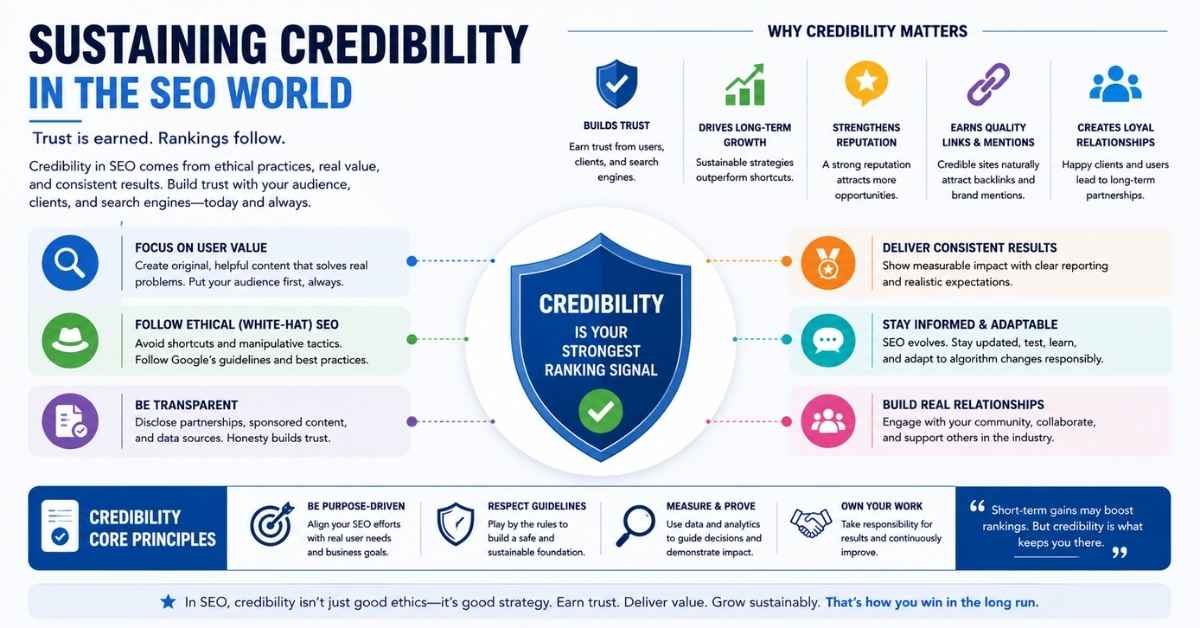
Google values content created by people with genuine Experience, Expertise, Authoritativeness, and Trustworthiness (EEAT).
Strengthen your EEAT by:
- Sharing practical knowledge
- Citing reliable sources when appropriate
- Keeping content accurate and updated
- Demonstrating real expertise
- Building a trustworthy brand
AI Overviews
Search is changing with AI Overviews and AI-assisted search experiences.
To improve visibility:
- Answer questions clearly.
- Use descriptive headings.
- Organize content logically.
- Include entity-rich information.
- Provide original insights.
Content that is easy to understand has a better chance of being surfaced in AI-generated search experiences.
Semantic SEO
Modern SEO is no longer about repeating keywords.
Instead, naturally include:
- Related topics
- Contextual phrases
- Synonyms
- Supporting entities
This helps search engines understand the overall meaning of your content.
Entity SEO
Entities are recognizable concepts that help search engines understand relationships between topics.
For this guide, relevant entities include:
- Google Search
- Google Search Console
- Google Analytics
- Search Intent
- Content Marketing
- Technical SEO
- Core Web Vitals
- AI Overviews
- EEAT
Using these entities naturally improves semantic relevance.
Information Gain
To outperform competitors, don't simply rewrite existing content.
Offer readers something new, such as:
- Original frameworks
- Practical workflows
- Real examples
- Updated strategies
- Industry observations
Unique insights increase the value of your content.
Content Refresh Strategy
SEO requires continuous improvement.
Review important pages regularly to:
- Update statistics
- Improve readability
- Add new examples
- Expand FAQs
- Refresh internal links
- Improve search intent alignment
Keeping content current helps maintain rankings over time.
Internal Linking at Scale
Internal links connect related pages and strengthen your website's overall structure.
Best practices include:
- Linking supporting articles to pillar pages.
- Using descriptive anchor text.
- Avoiding orphan pages.
- Maintaining logical navigation.
A strong internal linking strategy improves crawlability and user experience.
Practical SEO Checklist Before Publishing Content
Use this checklist before publishing every article.
Search Intent Review
- Does the article answer the user's primary question?
- Is the content aligned with informational or commercial intent?
Keyword Optimization Check
- Is the primary keyword included naturally?
- Are secondary and long-tail keywords integrated without overuse?
- Have semantic keywords been included?
Entity Coverage Check
- Are important entities mentioned naturally?
- Does the content provide enough contextual relevance?
Internal Linking Check
- Have you linked to related articles?
- Is there a clear path for users to continue exploring your website?
Technical SEO Check
- Is the page mobile-friendly?
- Does it load quickly?
- Are images optimized?
- Are title tags and meta descriptions complete?
User Experience Review
- Are headings easy to scan?
- Are paragraphs short and readable?
- Do tables and lists improve clarity?
Following this checklist helps ensure every article supports your overall SEO strategy.
Frequently Asked Questions
What is digital marketing in SEO?
Digital marketing in SEO refers to using Search Engine Optimization as part of a broader digital marketing strategy to improve organic visibility, attract targeted visitors, and generate leads through search engines.
Is digital marketing in SEO or is SEO a part of digital marketing?
SEO is one component of digital marketing. Digital marketing includes multiple channels such as content marketing, social media, email marketing, PPC advertising, and SEO.
Why is SEO important in digital marketing?
SEO helps businesses increase organic traffic, improve online visibility, build trust, and generate long-term results without relying solely on paid advertising.
What is local digital marketing in SEO?
Local digital marketing in SEO focuses on improving a business's visibility in local search results through location-based keywords, Google Business Profile optimization, online reviews, and local citations.
How long does SEO take to show results?
Most businesses begin seeing noticeable improvements within three to six months, although competitive industries may require more time.
Can small businesses benefit from SEO?
Absolutely. Small businesses often compete successfully by targeting local searches, creating helpful content, and building strong topical authority within their niche.
Is SEO better than PPC?
Neither strategy is universally better.
SEO delivers sustainable long-term growth, while PPC provides immediate visibility. Many successful businesses use both together.
Does SEO still work in 2026?
Yes. Although Google's algorithms continue to evolve, high-quality content, technical optimization, semantic SEO, and excellent user experience remain fundamental to long-term success.
Final Thoughts: Make SEO the Long-Term Growth Engine for Your Business
Understanding what is digital marketing in SEO is only the first step. The real value comes from applying SEO strategically to attract the right audience, answer their questions, and guide them through the customer journey.
Whether you're managing a blog, eCommerce store, SaaS platform, or local business, SEO should be viewed as a long-term investment rather than a quick marketing tactic. Focus on creating helpful content, understanding search intent, strengthening technical SEO, improving user experience, and building topical authority around your niche.
Remember that successful SEO isn't about chasing algorithm updates or manipulating rankings. It's about consistently delivering valuable content that solves real problems while making it easy for search engines to understand your website.
By combining content marketing, semantic SEO, entity optimization, local SEO, internal linking, and continuous performance analysis, you'll create a digital marketing strategy that generates sustainable organic traffic, builds customer trust, and supports long-term business growth.