Media & Publication refers to the creation, production, management, publication, and distribution of information across both traditional and digital channels. It encompasses newspapers, magazines, books, television, radio, blogs, websites, social media, academic journals, corporate publications, and multimedia platforms. Today, media and publication are no longer limited to print—they form the backbone of digital communication, journalism, content marketing, brand authority, and audience engagement.
Whether you're a business owner, content creator, journalist, marketer, publisher, student, or communication professional, understanding how media & publication works can help you publish high-quality content, reach the right audience, and build long-term credibility.
This guide explains the complete media publishing ecosystem, including different types of media, the publication process, digital publishing, editorial workflows, content distribution, emerging technologies, and proven strategies for creating impactful publications.
What Is Media & Publication?
Although people often use these terms interchangeably, media and publication have different meanings.
Media refers to the channels used to communicate information, entertainment, education, or news to an audience. These channels include print media, television, radio, websites, podcasts, streaming platforms, and social media.
Publication, on the other hand, is the process of preparing, producing, and distributing content for public consumption. A publication may take the form of a printed newspaper, an online article, a research journal, an eBook, or even a corporate newsletter.
Simply put:
- Media is the communication channel.
- Publication is the content released through those channels.
Together, they create the modern information ecosystem that connects organizations with audiences worldwide.
Why Do People Confuse Media and Publication?
The confusion exists because publications are distributed through media channels.
For example:
- A magazine is a publication.
- A news website is both a publication and a media platform.
- A YouTube channel acts as a digital media outlet while regularly publishing multimedia content.
- A company blog is a publication hosted on digital media.
Understanding this relationship helps businesses choose the right publishing strategy for their goals.
Why Media & Publication Matter More Than Ever
The way people consume information has changed dramatically over the past decade.
Instead of waiting for tomorrow's newspaper, audiences expect real-time news, expert insights, educational content, and engaging multimedia experiences available instantly across multiple devices.
For organizations, this shift creates both opportunities and challenges.
Building Authority and Trust
Publishing valuable content consistently positions an organization as an industry expert.
Businesses that invest in quality publications often experience:
- Greater brand awareness
- Higher customer trust
- Improved search engine visibility
- More qualified leads
- Long-term audience loyalty
This is why content publishing has become an essential part of modern digital marketing and brand communication.
Supporting Education and Public Awareness
Media and publications also play a vital role in:
- sharing research
- educating communities
- promoting innovation
- reporting news
- preserving historical information
- encouraging informed decision-making
Whether the content is academic, commercial, or journalistic, its impact extends far beyond simple communication.
Content Distribution Is Just as Important
Creating great content is only half the process.
Successful publishers also focus on content distribution, ensuring their articles, reports, videos, and publications reach the right audience through:
- search engines
- newsletters
- social media
- industry websites
- partnerships
- syndication
- email marketing
Without effective distribution, even outstanding content may never reach its intended readers.
Media vs. Publication: Understanding the Key Differences
Although closely connected, these concepts serve different purposes.
| Aspect | Media | Publication |
| Definition | Communication channels | Published content |
| Primary Goal | Deliver information | Share specific information or knowledge |
| Examples | TV, radio, websites, podcasts, social media | Newspapers, books, journals, blogs, reports |
| Format | Platform | Content |
| Audience Interaction | Ongoing | Individual editions or articles |
Recognizing this distinction helps businesses create stronger communication strategies and choose appropriate publishing formats.
The Main Types of Media
Modern communication relies on several forms of media, each serving unique purposes.
Print Media
Although digital platforms dominate today, print media remains valuable for magazines, newspapers, brochures, catalogs, and books where credibility and permanence are important.
Broadcast Media
Television and radio continue to reach millions of people through news programs, interviews, documentaries, and entertainment content.
Broadcast media remains especially effective for mass communication and public awareness campaigns.
Digital Media
Digital media has transformed publishing by enabling instant content creation and global distribution.
Examples include:
- websites
- online magazines
- blogs
- podcasts
- streaming platforms
- digital newspapers
- mobile applications
Digital publishing also provides detailed analytics, allowing publishers to measure reader engagement and improve future content.
Social Media
Social media platforms have become powerful publishing channels.
Organizations now use:
- LinkedIn for professional insights
- Facebook for community engagement
- Instagram for visual storytelling
- X for real-time updates
- TikTok for short-form videos
- YouTube for educational and long-form content
These platforms help publishers interact directly with audiences rather than relying solely on traditional distribution methods.
Emerging Media
Technology continues to reshape publishing through innovations such as:
- artificial intelligence
- augmented reality
- virtual reality
- interactive publications
- voice assistants
- immersive storytelling
These emerging technologies are creating entirely new ways for audiences to consume information.
Types of Publications You Should Know
Publications vary depending on their purpose, audience, and distribution method.
The most common include:
- Newspapers for current events and journalism.
- Magazines for specialized topics and features.
- Books for in-depth knowledge.
- Academic journals for research and scholarly communication.
- Corporate publications for company news and stakeholder communication.
- White papers for professional analysis and lead generation.
- Press releases for official announcements.
- Newsletters for audience engagement.
- Blogs for education, SEO, and thought leadership.
Each publication format serves a different objective, making it important to choose the one that best aligns with your communication goals.
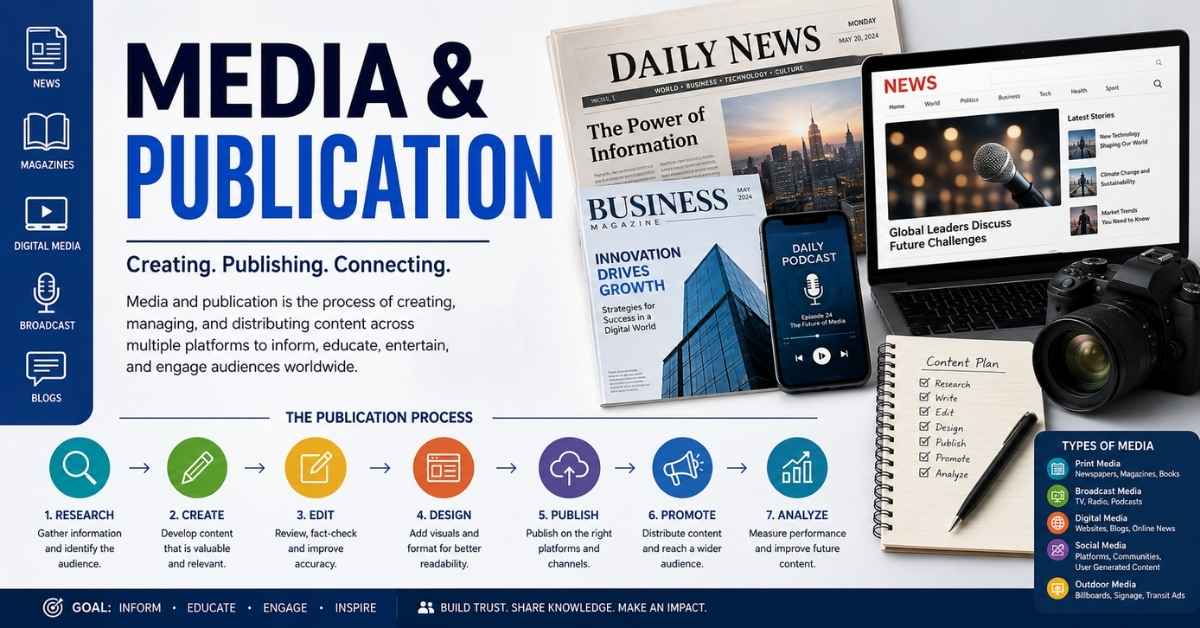
How the Publication Process Works: Step by Step
Creating a successful publication involves much more than simply writing an article. Every high-quality publication follows a structured workflow that ensures accuracy, consistency, and reader value.
Research and Planning
Every publication starts with thorough research. Before creating content, publishers identify:
- The target audience
- The primary objective
- Relevant keywords
- Current industry trends
- Reliable sources
- Competitor content gaps
Strong planning lays the foundation for content that informs, engages, and ranks well in search engines.
Audience Analysis
Understanding your audience helps you create content that solves real problems instead of simply sharing information.
Consider questions such as:
- Who will read this publication?
- What challenges are they facing?
- What questions are they trying to answer?
- Which format will they find most useful?
The better you understand your readers, the more valuable your publication becomes.
Content Creation
This is where research turns into engaging content.
A high-quality publication should:
- answer the reader's main question immediately;
- use clear, natural language;
- include practical examples;
- maintain logical flow;
- provide actionable advice.
Whether you're creating a news article, blog post, magazine feature, or white paper, your content should always prioritize reader experience.
Editing and Proofreading
Professional publications go through multiple editing stages to improve:
- grammar;
- clarity;
- consistency;
- readability;
- tone of voice;
- factual accuracy.
Editing often has a greater impact on quality than the first draft itself.
Fact-Checking
Trust is one of the most valuable assets in media and publication.
Before publishing, verify:
- names;
- statistics;
- quotations;
- dates;
- references;
- technical information.
Accurate information strengthens credibility and supports long-term audience trust.
Design and Multimedia
Modern publications rely on more than text alone.
Adding elements such as:
- images;
- infographics;
- videos;
- charts;
- comparison tables;
- illustrations
makes content easier to understand and more engaging.
Publishing and Distribution
After final approval, the publication is distributed through appropriate channels, including:
- company websites;
- blogs;
- online magazines;
- email newsletters;
- social media;
- industry publications;
- news platforms.
An effective distribution strategy ensures valuable content reaches its intended audience.
Performance Analysis
Publishing is not the final step.
Successful publishers monitor:
- organic traffic
- engagement
- average reading time
- social shares
- conversions
- reader feedback
These insights help improve future publications.
Traditional Publishing vs. Digital Publishing
Publishing has evolved dramatically with the growth of the internet.
| Traditional Publishing | Digital Publishing |
| Printed materials | Online content |
| Longer production cycle | Instant publishing |
| Limited geographic reach | Global accessibility |
| Higher production costs | Lower publishing costs |
| Difficult to update | Easy to edit and refresh |
| Limited performance tracking | Detailed analytics available |
Today, many organizations combine both approaches to maximize their audience reach.
The Complete Media & Publication Workflow
Professional publishing follows a repeatable process that ensures quality from idea to distribution.
Editorial Planning
Every successful publication begins with an editorial plan.
This includes:
- publication objectives;
- target audience;
- content topics;
- publishing frequency;
- deadlines.
A well-structured editorial plan keeps teams organized and aligned.
Content Calendar
An editorial calendar helps publishers schedule content consistently.
It outlines:
- publication dates;
- responsible team members;
- publication channels;
- content formats;
- campaign timelines.
Consistency is one of the strongest indicators of a professional publishing strategy.
Team Collaboration
Modern publications often involve multiple specialists, including:
- writers;
- editors;
- graphic designers;
- photographers;
- SEO specialists;
- marketing managers.
Clearly assigning responsibilities improves efficiency and reduces production delays.
Review and Approval
Before publication, content should pass through a structured review process to ensure:
- editorial consistency;
- legal compliance;
- factual accuracy;
- brand alignment.
This step protects both the publisher's reputation and audience trust.
Publishing Schedule
Rather than publishing randomly, professional organizations follow a defined schedule based on audience behavior, marketing campaigns, and seasonal opportunities.
Regular publishing strengthens audience expectations and increases long-term engagement.
Essential Skills for Success in Media & Publication
Professionals working in media and publishing combine creativity with technical expertise.
Key skills include:
Writing and Storytelling
Clear communication remains the foundation of every successful publication.
Readers appreciate content that is:
- informative;
- engaging;
- easy to understand;
- well structured.
Editing
Strong editing improves readability, eliminates unnecessary repetition, and ensures every section adds value.
Research
Reliable publications depend on thorough research and trustworthy sources.
Writers should always verify facts before publishing.
Search Engine Optimization (SEO)
Modern publications should be optimized for both readers and search engines.
This includes:
- natural keyword integration;
- descriptive headings;
- internal linking;
- helpful content;
- semantic relevance.
Visual Communication
Effective visuals help explain complex ideas quickly while improving user engagement.
Data Analysis
Successful publishers continually analyze performance metrics to understand what resonates with their audience and refine future content strategies.
The Technology Behind Modern Publishing
Technology has transformed every stage of the publication process.
Today's publishers rely on:
- Content Management Systems (CMS) to create and manage content.
- Digital publishing platforms for distributing articles and multimedia.
- Artificial intelligence to support research, proofreading, and content optimization.
- Automation tools to streamline editorial workflows.
- Analytics platforms to measure audience behavior and publication performance.
While technology improves efficiency, human expertise remains essential for producing accurate, original, and trustworthy publications.
How Businesses Use Media & Publication to Build Authority
A well-planned media & publication strategy is one of the most effective ways to establish credibility and become a trusted voice within an industry.
Businesses no longer rely solely on advertising. Instead, they educate, inform, and inspire their audiences through valuable publications.
Some of the most effective approaches include:
Thought Leadership
Publishing expert articles, research reports, and opinion pieces positions your brand as an authority rather than just another service provider.
Corporate Blogs
A regularly updated blog helps businesses:
- Improve SEO rankings
- Answer customer questions
- Generate qualified leads
- Increase website traffic
- Build long-term trust
White Papers and Industry Reports
These in-depth publications demonstrate expertise by presenting original research, market analysis, or technical insights.
Press Releases
Press releases remain an effective way to announce:
- product launches;
- company milestones;
- partnerships;
- events;
- awards.
Brand Storytelling
People connect with stories more than promotional messages.
Sharing customer success stories, company milestones, and behind-the-scenes content helps create stronger emotional connections with readers.
How to Create an Effective Publication Strategy
Publishing consistently without a strategy often leads to disappointing results.
Instead, follow this structured approach.
Define Your Goals
Decide whether your publication aims to:
- educate;
- generate leads;
- increase brand awareness;
- improve SEO;
- support customer retention.
Clear objectives make it easier to measure success.
Understand Your Audience
Research your readers'
- interests;
- challenges;
- search intent;
- preferred content formats;
- preferred communication channels.
Creating audience-focused content consistently delivers better engagement.
Choose the Right Publishing Channels
Different audiences consume content in different ways.
For example:
- Blogs attract organic search traffic.
- LinkedIn works well for B2B professionals.
- Newsletters nurture existing subscribers.
- Social media expands reach and encourages interaction.
- Industry publications enhance credibility.
Selecting the right mix of channels increases visibility.
Develop an Editorial Calendar
A publication calendar ensures consistent output and keeps teams organized.
It should include:
- publication dates;
- content topics;
- target keywords;
- assigned authors;
- review deadlines;
- distribution channels.
Measure and Improve
Track metrics such as:
- organic traffic;
- engagement rate;
- average time on page;
- conversions;
- returning visitors;
- social shares.
Use this data to refine future publications.
Common Challenges in Media & Publication
Even experienced publishers encounter obstacles.
Some of the most common include:
Content Overload
Audiences are exposed to thousands of pieces of content every day.
Creating original, high-value publications is essential for standing out.
Misinformation
Publishing inaccurate information can quickly damage credibility.
Always verify sources before publication.
Copyright and Intellectual Property
Respect copyrights, licenses, trademarks, and image usage rights when creating or republishing content.
Audience Fragmentation
Modern audiences consume content across multiple platforms.
A multichannel publishing strategy helps maintain consistent visibility.
Changing Algorithms
Search engines and social media platforms continually update their algorithms.
Publishers should focus on quality, relevance, and user experience rather than trying to manipulate rankings.
LEARN MORE: Digital Marketing in SEO
Best Practices for High-Quality Publications
Professional publishers consistently follow a set of editorial standards.
- Research thoroughly before writing.
- Fact-check every important claim.
- Write for people before search engines.
- Use clear headings and logical structure.
- Support ideas with practical examples.
- Include visuals where appropriate.
- Maintain a consistent editorial style.
- Refresh evergreen content regularly.
- Optimize naturally with semantic keywords instead of keyword stuffing.
- Prioritize readability and accessibility.
These practices improve both reader satisfaction and long-term search visibility.
Measuring the Success of a Publication
Publishing is only valuable if it achieves measurable outcomes.
Monitor the following key performance indicators:
| Metric | What It Measures |
| Organic Traffic | Visibility in search engines |
| Page Views | Overall audience reach |
| Average Time on Page | Reader engagement |
| Bounce Rate | Content relevance |
| Social Shares | Audience advocacy |
| Lead Generation | Marketing effectiveness |
| Conversion Rate | Business impact |
| Returning Visitors | Reader loyalty |
Review these metrics regularly to identify strengths and opportunities for improvement.
Future Trends Shaping Media & Publication
The publishing industry continues to evolve rapidly.
Key trends include:
Artificial Intelligence
AI assists with research, editing, personalization, and workflow automation while human expertise remains essential for originality and editorial judgment.
Personalized Content
Readers increasingly expect publications tailored to their interests and preferences.
Interactive Experiences
Interactive graphics, calculators, quizzes, and multimedia content improve engagement and encourage longer reading sessions.
Voice Search Optimization
As voice assistants become more common, publishers should answer questions naturally and structure content clearly.
Data-Driven Publishing
Analytics now guide editorial decisions, helping publishers identify the topics and formats that resonate most with their audiences.
Frequently Asked Questions
What is the difference between media and publication?
Media refers to the channels used to communicate information, while publication is the process of creating and distributing content through those channels.
What are the main types of media?
The primary categories include print media, broadcast media, digital media, social media, and emerging media technologies.
Why is media and publication important for businesses?
A strong publishing strategy helps businesses increase visibility, build authority, attract qualified audiences, and strengthen customer trust.
What skills are essential for a career in media and publication?
Professionals benefit from skills in writing, editing, research, storytelling, SEO, digital marketing, analytics, visual communication, and project management.
How can I improve the quality of my publications?
Focus on creating accurate, well-researched, and reader-focused content, maintain consistent editorial standards, use semantic SEO naturally, and update your content regularly to keep it relevant.
Conclusion
Media & publication continue to shape how information is created, shared, and consumed across the world. From traditional newspapers to digital platforms, effective publishing combines high-quality content, strategic distribution, and continuous optimization to reach the right audience.
Whether you're building a business, growing a personal brand, managing a publication, or launching a content marketing strategy, success depends on understanding your audience, maintaining editorial excellence, and adapting to new technologies.
By applying the principles covered in this guide—strong planning, audience-focused content, ethical publishing, semantic SEO, and performance analysis—you can create publications that inform, engage, and deliver lasting value.